Talk RL Podcast
Interview & Research Overview
Conversation with Robin Chauhan about my research. Great place to start for a big picture overview.
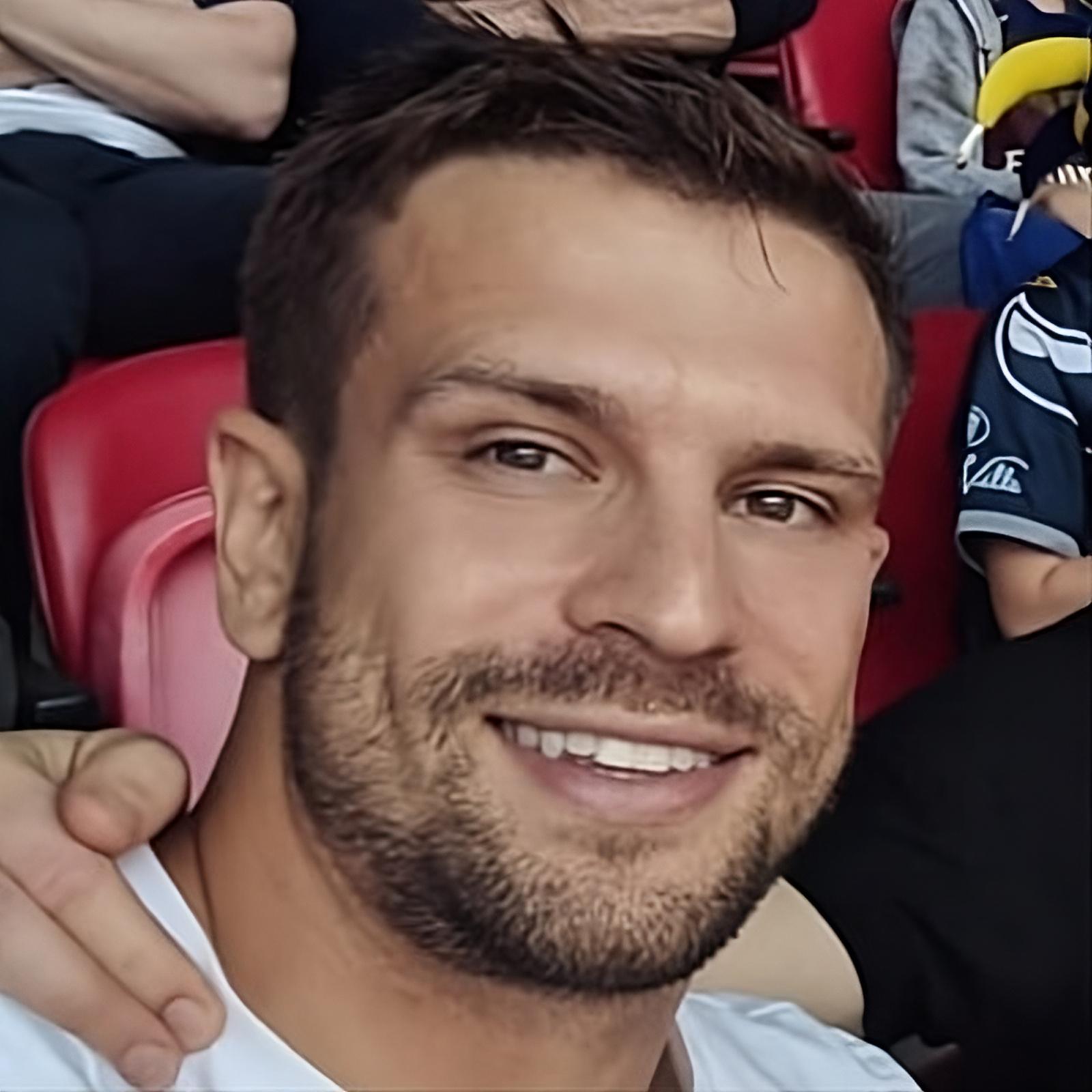
I lead the Science of Post Training team at Google DeepMind in London. My research is on reinforcement learning, with a particular focus on exploration: how to make good decisions when you do not yet know the world. For a longer take, see this podcast interview.
Before this, I spent two years at OpenAI working on reinforcement learning and reasoning for ChatGPT. Earlier, I was a staff research scientist at Google DeepMind, first in London and then in San Francisco helping build the efficient agent team. I completed my Ph.D. at Stanford University under Benjamin Van Roy. My thesis Deep Exploration via Randomized Value Functions won second place in the Dantzig dissertation award.
Before Stanford, I studied maths at Oxford and worked as a credit derivatives strategist for J.P. Morgan in London and New York. For the latest, see my twitter.
For full list see Google Scholar.
Interview & Research Overview
Conversation with Robin Chauhan about my research. Great place to start for a big picture overview.
NeurIPS 2023 Spotlight
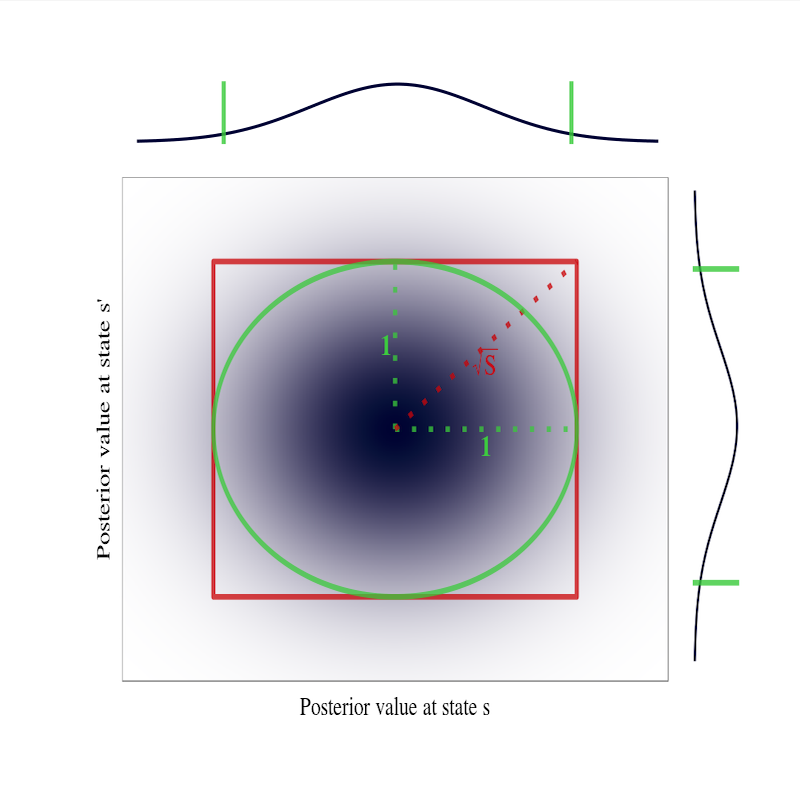
Scalable uncertainty in deep learning. Better performance than an ensemble of size=100 at cost <2 particles.
NeurIPS 2022 Spotlight
Benchmark for the prediction quality of approximate posterior inference in deep learning. Popular Bayesian deep learning approaches do not do well.
JMLR 2019
Journal paper that embodies the best pieces of research from my PhD and other pieces of work from our group.

Foundations and Trends in Machine Learning 2020
A thoughtful tutorial around Thompson sampling to balance exploration with exploitation.
ICML 2016 (full oral), EWRL 2016
Computational results show PSRL dramatically outperforms UCRL2. We provide insight into why.
ICLR 2020 Spotlight
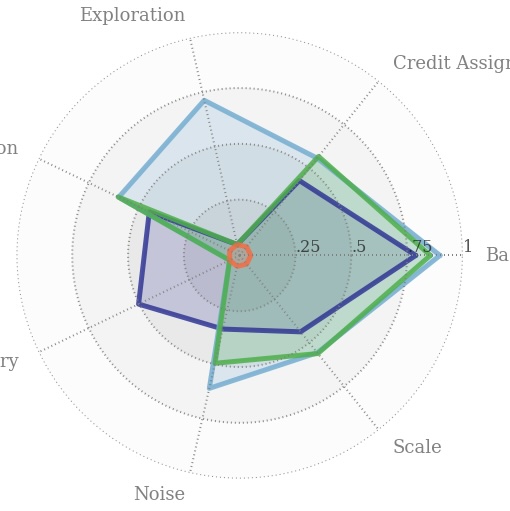
Methodical benchmark for the scaling properties of RL algorithms, with open source code.
Foundations and Trends in Machine Learning 2023
An elegant perspective on reinforcement learning through the lens of information theory.
Follow the links below.
Or, check out my CV.